Getting Started
The First 30 Days: A Beginner's Guide
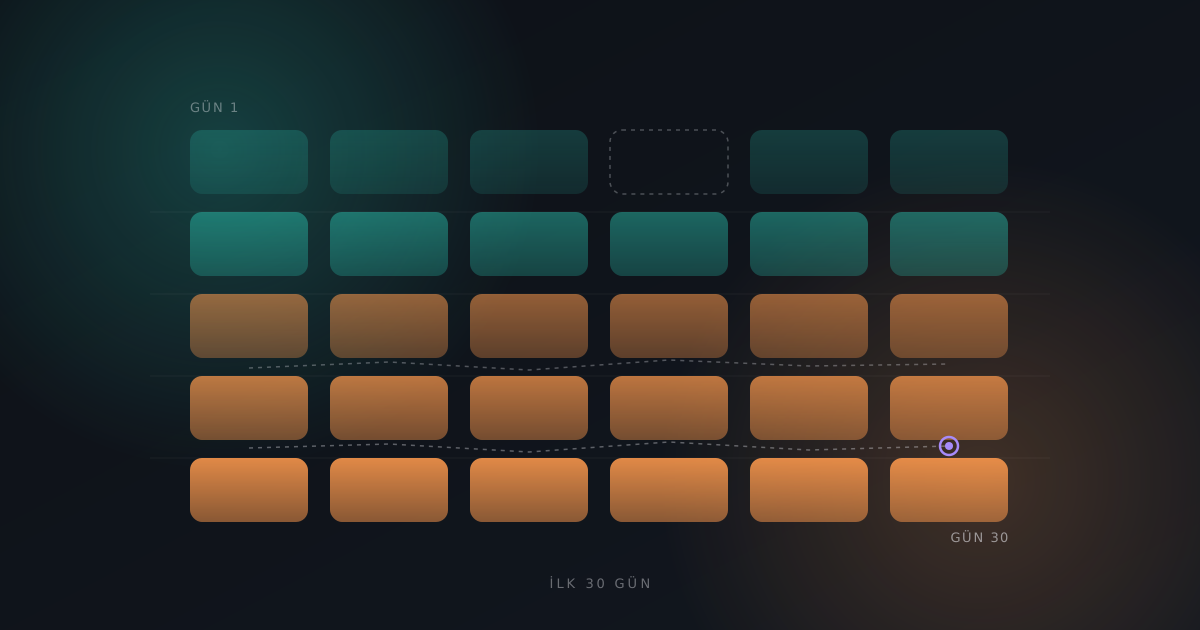
The first 30 days of nutrition logging don’t feel automatic — if anything, the first few days feel like extra work: remembering to open the app, picking the right button, logging dinner before you forget what was in it. That’s not a sign something’s wrong; it’s a sign the habit hasn’t formed yet, and it won’t be fully gone by day 30 either — but it will be noticeably lighter. This guide is written for beginners trying regular nutrition logging for the first time.
What does the first week actually feel like?
What wears people out in week one usually isn’t a lack of discipline — it’s decision volume: which meal, which method, when to log it, repeated small questions all day. A mid-afternoon snack gets eaten with the phone somewhere else, the amount gets guessed at hours later, and the estimate ends up rough — that’s not the log “failing,” it’s daily life not yet lining up neatly with the habit of logging it. A meal gets forgotten, a day gets skipped — that’s expected, not a disaster. In Cookrange, missing a meal doesn’t break the rest of the day: the meal you missed doesn’t trigger a retroactive penalty or force a restart, and the rest of your plan stays exactly as it was. If you want, you can log something else in its place or regenerate the plan — either one is what actually updates the day’s and week’s totals; the full mechanic is covered on the how it works page. The real goal of week one isn’t a flawless log, it’s not quitting: coming back the next day after a gap beats treating that day as if the whole thing failed.
The 30-day curve: when does it actually get easier?
A behavior becoming automatic — done without thinking about it — takes longer than most people expect. Lally and colleagues’ 2010 study, published in the European Journal of Social Psychology, found that automaticity for a new habit took an average of 66 days, ranging anywhere from 18 to 254 days depending on the person. Thirty days lands at roughly the halfway point of that average — so it’s expected, not a failure, for logging to still feel like a deliberate step by day 30. What changes isn’t automaticity, it’s speed: logging a meal might take a full minute in the first few days and shrink to a handful of seconds by week three, at which point it starts to feel like a normal part of the day rather than a task.
Which logging method should you start with?
Cookrange supports five ways to log a meal: barcode, quick add, recipe generation, photo, and plan. Trying to use all five from day one is the fastest way to master none of them. For someone brand new, a sensible order comes down to three:
- Quick add, for the first stretch. No product search, just an estimated calorie/protein entry logged in seconds; the thing worth building in week one isn’t accuracy, it’s the reflex of opening the app and logging something every day.
- Barcode, for repeat groceries. If the same milk, bread, or snack gets bought every week, it only needs scanning once — the system remembers the product. This tends to pay off most after the second week, once a grocery routine settles in.
- Photo, for home cooking and eating out. For a plate with no barcode and no clear recipe, this is the lowest-friction option.
Recipe generation and plan generation are more detailed features that aren’t the point of the first 30 days — they earn their keep once the daily logging reflex is already in place.
What’s worth ignoring in the first 30 days?
The bigger risk in month one isn’t doing too little, it’s trying to do too much at once. Hitting an exact macro split down to the gram, comparing your streak against everyone else’s in a squad, or working out a 90-day projection — none of that is what the first 30 days are for. Those details are real and useful eventually, but stacking them on top of a logging reflex that hasn’t formed yet risks burying the one thing actually worth building: the habit of logging something every day. One measure is enough for month one: did you log something today, or didn’t you?
Should you join a squad in the first 30 days?
Lally’s wide range (18 to 254 days) points to something specific: while a habit is still forming, a string of missed days that nobody notices can be exactly what keeps it from ever sticking. Skip a Tuesday on a solo log and you’re the only one who knows; tied to a squad, the rest of the group sees the same gap — and sometimes someone flags it before you do yourself. That doesn’t make the first 30 days easier by itself, but it can act as a safety net during exactly the window where the habit is most fragile. Joining a squad isn’t required — logging and planning work fine without one — but for someone who responds to light social visibility and isn’t bothered by shared exposure, it can make a real difference in getting through month one. If shared visibility sounds stressful rather than helpful, spending the first 30 days solo and adding a squad later is a perfectly reasonable call.
What changes over the month
| Period | Dominant feeling | Recommended method | Squad’s role |
|---|---|---|---|
| Week 1 | Remembering feels like extra effort | Quick add, for most meals | Not required to join yet — watching is enough |
| Weeks 2-3 | Logging speeds up but is still deliberate | Barcode kicks in for repeat groceries | A gap day starts becoming noticeable to others |
| Week 4 | Not automatic, but familiar | Photo logging gets added (home/eating out) | Someone noticing a missed day pays off most here |
Frequently asked questions
If I miss a meal in the first week, does it break the plan? No. Cookrange marks the missed meal as missing, but that doesn’t trigger a retroactive penalty or reset — the rest of your plan stays exactly as it was. What matters is picking logging back up the next day.
Should I join a squad right away, or wait? Either is reasonable. If light social visibility motivates you, joining early can make the first month easier; if shared visibility feels uncomfortable, spending a few weeks solo first and joining once the habit has some footing can work better. There’s no single correct order, only the starting point that fits you.
Is logging fully automatic after 30 days? For most people, not yet. Research puts average automaticity at 66 days, sometimes considerably longer; day 30 is usually somewhere around the midpoint. Logging should feel faster and less effortful by then, but doing it without thinking at all can take longer — that’s not a setback, it’s the normal shape of the process.
Where to start
The first 30 days won’t be flawless, and they don’t need to be — what matters is still being there on day 30. Cookrange is currently in its waitlist stage; join the waitlist for early access.